UNDERWATER FOREST,
INSIDE A CARCERAL ECOLOGY
Part of the Further Triennial, Spring 2027
At the Davenport Jail - Santa Cruz Museum of Art & History (MAH)
Work in Progress
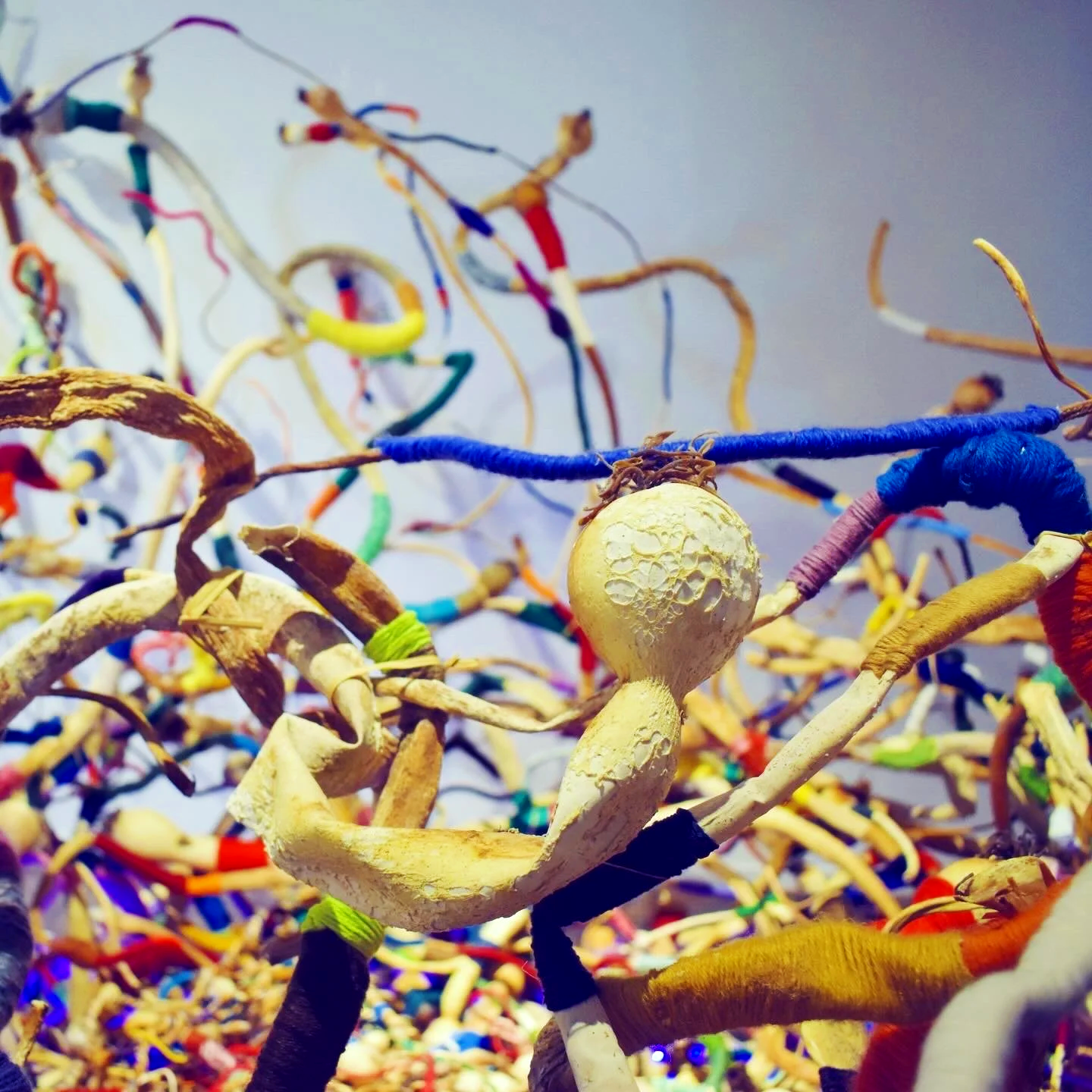
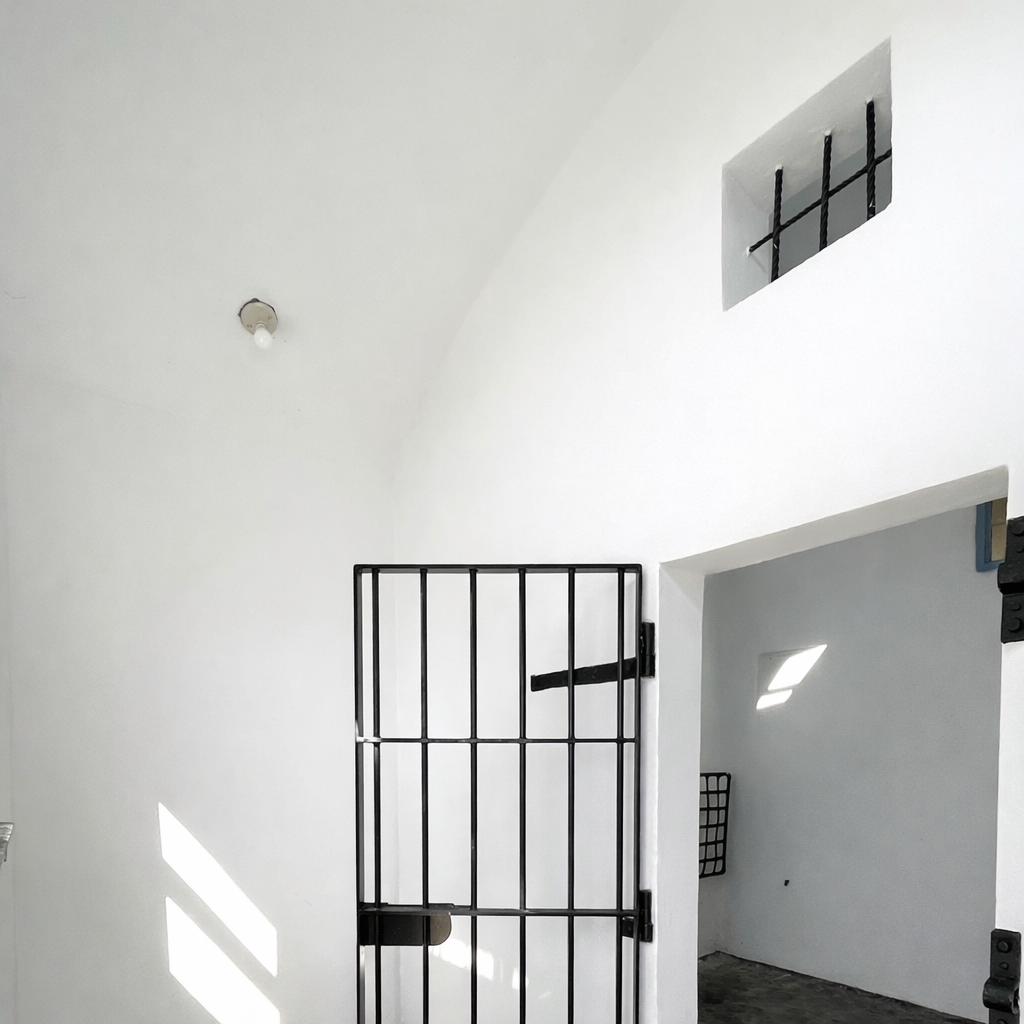
At the invitation of the Santa Cruz Museum of Art & History (MAH), Underwater Forest, Inside a Carceral Ecology inhabits the historic Davenport Jail—a former site of confinement facing the Pacific Ocean. In this architecture charged with punishment, artists Kalie Granier and Alex Olwalconstruct an immersive kelp forest from hundreds of specimens collected along the coasts of Santa Cruz and Monterey over the past four year.
The project sets up a confrontation between two systems of control: the collapsing kelp forest and the prison. In both, structural violence becomes spatial: when relations break, space contracts and circulation stops. In California, 90% of kelp forests have disappeared. In the “urchin barrens,” as in the cell, movement is blocked, diversity collapses, and a single regime dominates. What disappears first is not matter, but relation—ecological, social, reciprocal.

Inside the jail, kelp becomes insurgent architecture, reclaiming verticality where walls once enforced stasis. Olwal’s installation reintroduces breath, movement, and interdependence into a space built for immobilization. The kelp forest is a field of exchange—light, nutrients, species, sound—while the prison interrupts these flows. When complexity collapses, whether urchins or social bonds, desert takes hold. The installation transforms the cell: from confinement to circulation, from surveillance to immersion.

This work proposes not reform, but reorientation. Restoration is not a return to a mythic past, but the reactivation of interdependence. Thinking beyond the prison is not improving the cage, but dismantling the conditions that make it necessary. Here, repair is not redemption: it is the reopening of circulation.