STRONGYLO, WEAVING RESTORATION
“Listening to the Entangled Life of Kelp Forests” Work in Progress
Support from: Ocean Origins, Reef Check Foundation, Mexcal, Sitka Sound Science Center
Grant awarded by: Santa Cruz Arts Council, Villa Albertine San Francisco
Radio Interview — KCAW Raven Radio, Sitka, Alaska: https://www.kcaw.org/2026/08/25/artist-seeks-sitkans-to-share-perspectives-on-kelp-forests/
STRONGYLO is a contemporary art investigation into kelp forest restoration, exploring its ecological, sociological, cultural, and political dimensions.
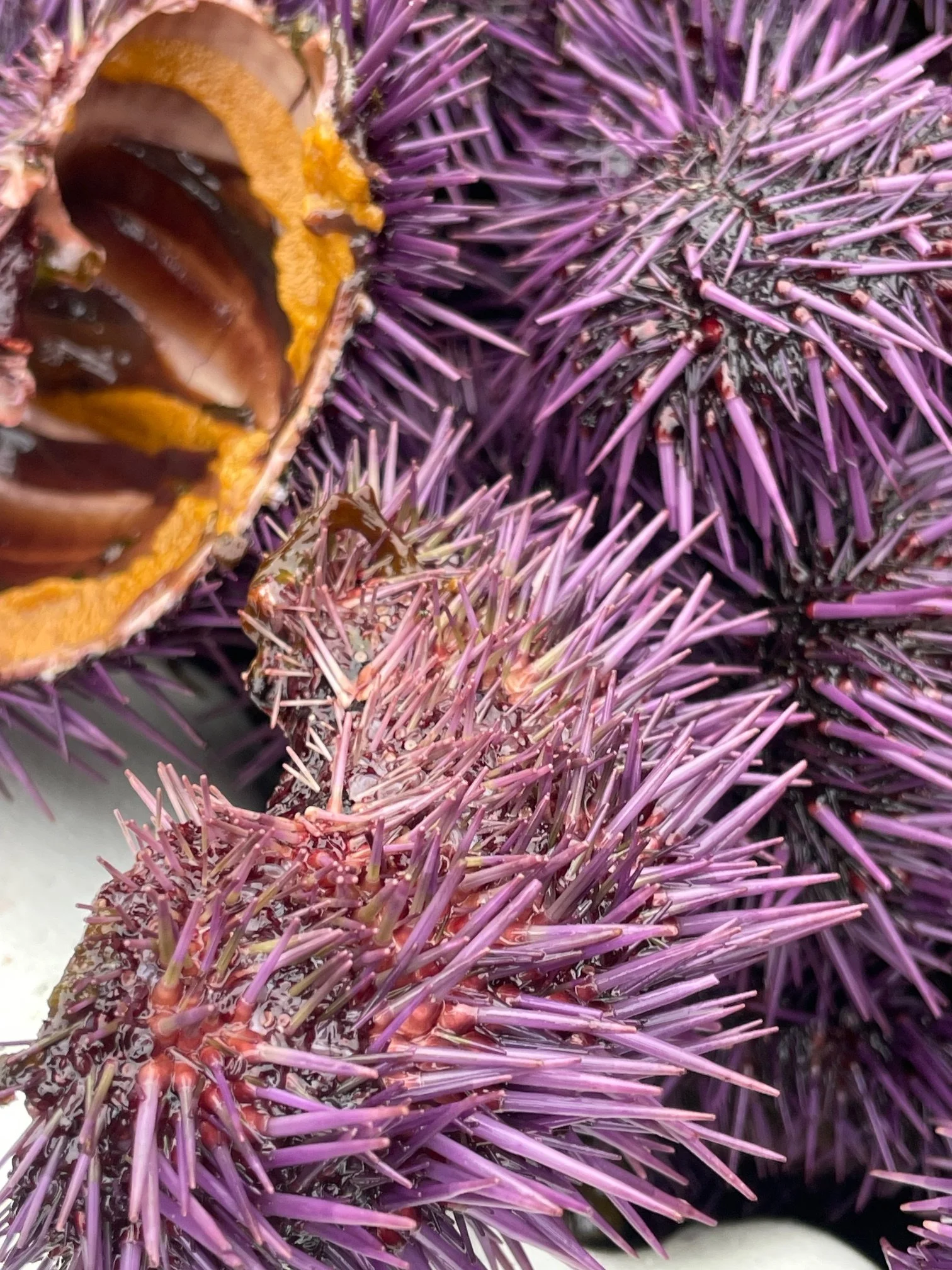
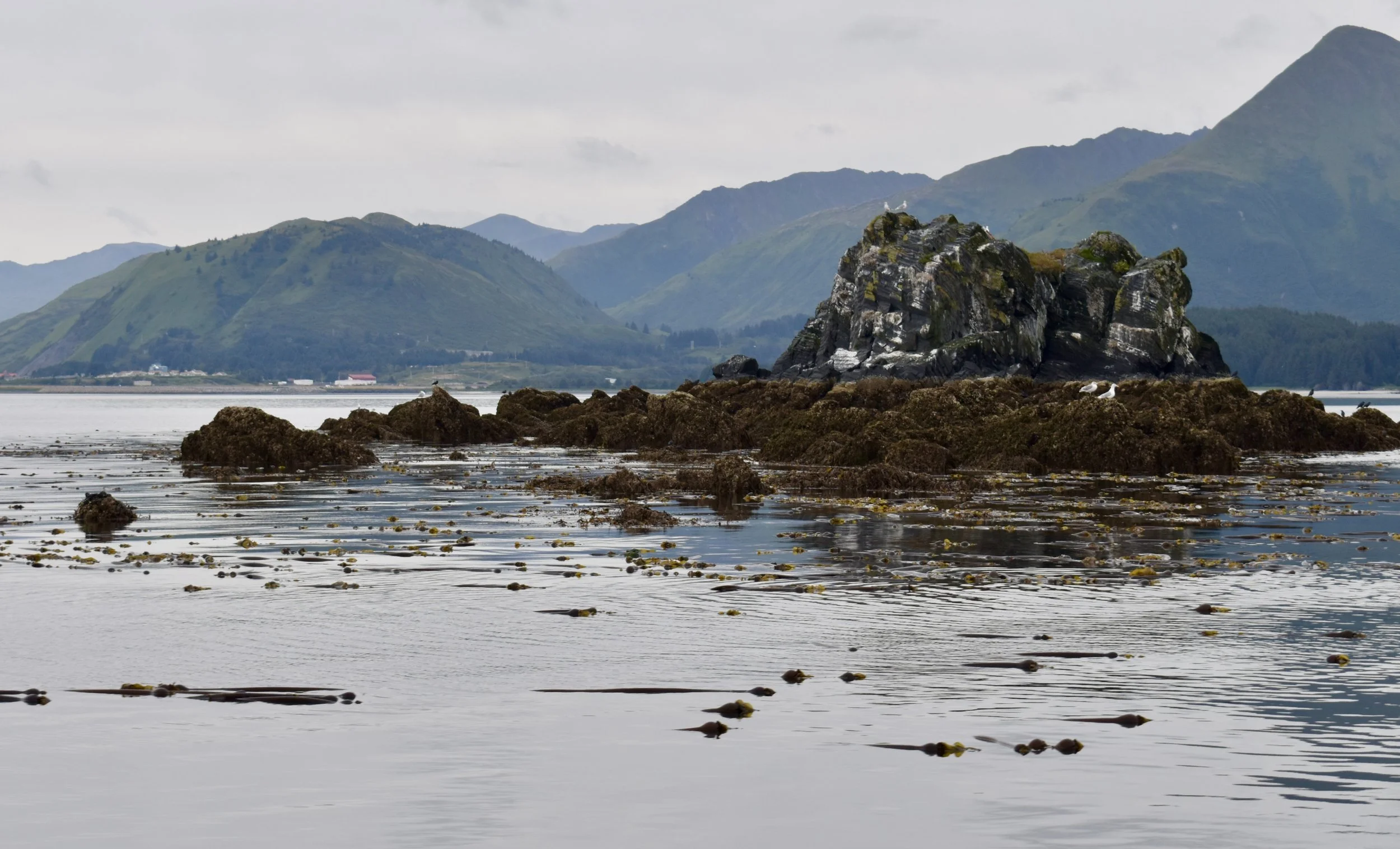
From Baja California to Alaska, I follow the purple sea urchin, Strongylocentrotus purpuratus, a native inhabitant of kelp forests whose populations have increased in some regions as marine heatwaves intensify and predators decline. When too abundant, urchins can consume kelp faster than forests can regenerate, contributing to the formation of underwater “urchin barrens.”
But the urchin is neither enemy nor victim. It is part of a complex web of relationships that challenges the way we think about ecological crisis and restoration. What are we trying to restore, and for whom? Who defines what a healthy ecosystem is? Who knows, cares for, depends on, and decides its future?
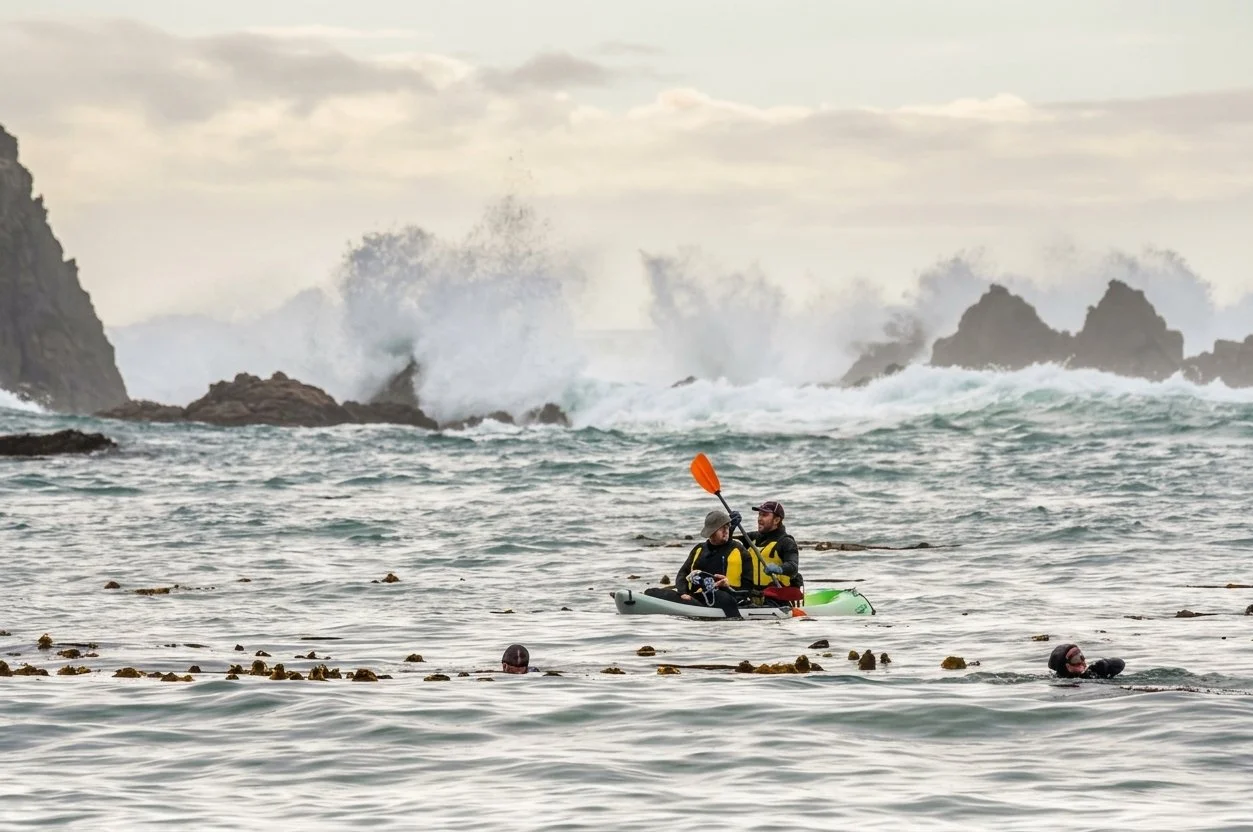
Through fieldwork and encounters with scientists, fishers, divers, kelp farmers, coastal communities, and Indigenous communities, STRONGYLO examines restoration as a relational process shaped by multiple forms of knowledge, histories, and ways of inhabiting the ocean.
Restoration is never a neutral gesture. To restore a living environment is to make choices about what should be protected, what should be transformed, and what forms of life are allowed to coexist. It is an attempt to care for a world while inevitably intervening in the relationships that sustain it.

The purple sea urchin makes these contradictions particularly visible. It cannot simply be separated into the categories of “problem” or “solution.” It may be removed to support kelp recovery, harvested as food, studied as a scientific object, or cultivated through aquaculture. Each of these practices produces a different relationship between humans, urchins, kelp, and territory.

This complexity raises a broader question: how can we repair an ecosystem without reducing its living relationships to something we can simply manage or control?

Coastal restoration can be understood as a form of interspecies negotiation. It involves learning to act within systems whose complexity exceeds our intentions and whose histories cannot be fully reconstructed. Care is therefore always imperfect—entangled with predation, death, uncertainty, economic interests, cultural values, and shared responsibility.

The project approaches these tensions through contemporary art. Rather than illustrating ecological research, I use artistic practices as ways of listening, observing, collecting, translating, and making relationships visible. Photography, film, sculpture, installation, material experimentation, and conversation become tools for moving between different scales of experience—from the body of an individual urchin to the social, cultural, and political structures that shape an entire coastline.

Art can create a space where different forms of knowledge encounter one another without necessarily being resolved into a single narrative. Scientific observation can meet embodied experience; local memory can meet ecological data; cultural knowledge can meet material traces of an environment.

In this sense, the artworks are not representations of a stable ecosystem, but traces of relationships in motion. They ask us to consider restoration not as a return to a fixed or idealized past, but as an ongoing process of negotiation with a changing world.